For more about why this author writes sci-fi eco-adventures, visit her website: KHBrower.com
Showing posts with label sci-fi. Show all posts

Wednesday, May 16, 2018

"Mission to Blue Grannus" Novel Update

The most consistent thing readers of Green Tara have said is, "When can I read the next one?" And indeed the novel was always meant to be the first in a trilogy. Now, I have a follow-up novel that should be ready late this year. 

The setting for Mission to Blue Grannus is inspired by ice caves that form during high winds and deep freezes. These conditions occur here on Earth on Lake Michigan and Lake Superior, where waves freeze solid and swells become ice caves. 
This new one, Mission to Blue Grannus, picks up two years after the end of Green Tara, when the pirate twins invite Gordy, now 15, to join them in a rescue mission. The pirate ship arrives at the edge of the Grannus system soon after his family. They're avoiding a Triumvirate engineering crew sent to reopen a toxic mine on the blue ice moon. 

The Grannus System was at a crossroads. The outer ring is volatile, with a crack in dimensions that offered a faster than light pathway to a network of destinations, including her mom's last known location, and they needed to find her. 

Also, the crossroads was about power and who controls the land and water. On Blue Grannus the original mine had closed decades ago, leaving the miners behind, abandoned refugees. One faction of the refugees lives deep in the blue ice caves, where the mushroom man cultivates strains of mycelia to myco-remediate the moon's toxic water. 
For more stunning landscapes that inspired my story world for this part of Gordy's journey, see these photos by Heather Higham.
The scientific inspiration of Blue Grannus comes from world mycology expert Paul Stamets. I saw his TED talk "How Mushrooms Can Save the World" and immediately understood the implications of his research for repairing damage to our Earth, and also for my sci-fi future vision of human terraforming and myco-remediation efforts. So, just as book 1 was inspired by invisible, essential phytoplankton in the ocean, book 2 is inspired by invisible and essential mycelium networks, the underground rootlike systems of the Fungi Kingdom, and the myco-remediation action of those networks. 

In my story world on the Blue Ice Moon orbiting the gas giant of the Grannus System, the Trivert mining engineers are starting up tests again. Orders from the board were to apply new techniques in the extraction process to yield gold and other precious metals, even though these new methods would put human  refugees at further risk by unleashing even more toxic chemicals into their water system. Gordy and his cousin Virginia, my teenage eco-warrior heroes, volunteer to help the pirates and the refugees make a trade that will protect their myco-remediation efforts. 
The power of mycelial networks to remediate poisoned water is a perfect fit for Mission to Blue GrannusFrom Radical Mycology, here's a clear 1-page overview of myco-remediation: https://radicalmycology.com/educational-tools/human-uses-of-mushrooms/mycoremediation-101/
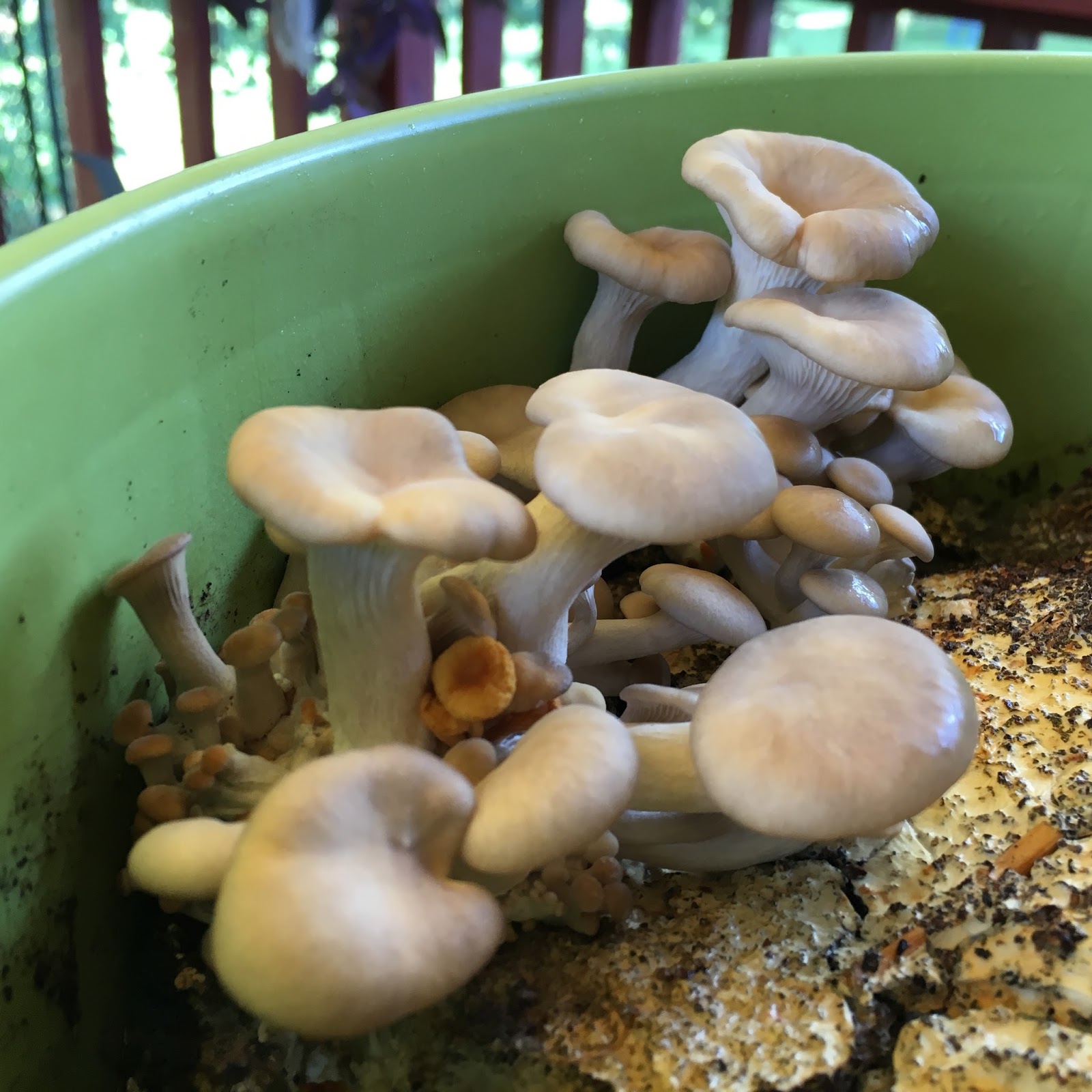
Two years ago, to understand more of the considerations, I put on my literary scientist hat and took a deep dive into all things mycological. I grew oyster mushrooms from a patch, bought the book, and took a weekend seminar Mycelium Running, by Paul Stamets. To the best of my ability I have marinated the entire story with what I learned with him and his team at Fungi Perfecti.

When I do classroom visits with Green Tara, the fifth and sixth graders are thrilled by the adventure, in which the main characters take action steps to regenerate bio-systems. I'm looking forward to taking Mission to Blue Grannus to the classroom, as well. 

We all need action steps, a game plan, for our land and water are under assault locally and globally. The question I try to answer in this series is How can we repair the damage humankind has wrought on our beautiful planet? 

Thursday, October 12, 2017

Writing Other Worlds:
Society, Science, & Sensory Perception


In September I led a workshop at my local public library on developing story worlds for science fiction. I chose to examine world building through three lenses:
  • Society - what's at stake for the characters and what orders their world
  • Science - what's possible and what are the limitations, both mechanically and biologically 
  • Sensory Perception - the way the character senses the world; go beyond visuals, get visceral
To prepare I looked for good examples of world building and found that most successful stories first draw the reader in with a character's sensory perception or a character's experience that is framed by science and engineering beyond what you and I encounter in typical contemporary life.
The fictional society is built up and revealed through many of these details of the character's experience.

As book enthusiasts we usually describe the fictional society first. As in, The Hunger Games is a story where the main character competes in an annual reality game show for which every district sends a teen champion to fight to the death. But remember, the reader's or movie goer's experience of learning the rules of the game and the role Kat plays in it is quite different.

To explore what successful world building might look like, I started the workshop by reading the first 2-1/2 pages of Ender's Game, the 1985 novel by Orson Scott Card.

I love how Card give us the immersive story world of Ender's Game. And I love all the creative energy in our Saturday workshop at the Monroe County Public Library, writers of all ages imagining humankind thriving in exciting and authentic future story worlds.

My next library workshop is April 7, 11:30-1:30. I'll keep you posted.

Meanwhile, here are some key passages of the opening pages of Ender's Game and my notes, in story order:
Sensory Perception[The monitor lady said it would come out today.] "The monitor gone. Ender tried to imagine the little device missing from the back of his neck. I'll roll over on my back in bed and it won't be pressing there. I won't feel it tingling and taking up the heat when I shower."
Science"This won't take long," said the doctor. "It's designed to be removed. Without infection, without damage."
The implication from the full text is that the tiny monitor in the back of Ender's neck picks up what he sees and hears and transmits that information to the, as yet unnamed, authorities so they can see and hear, and evaluate Ender's behavior. Before we know why he's been monitored -
Sensory Perception, this time raising the stakes"Suddenly a pain stabbed through him like a needle from his neck to his groin. Ender felt his back spasm, and his body arched violently backwards; his head struck the bed. He could feel his legs thrashing ..." 
After the doctor and nurse are able to bring Ender's seizure under control -
Society"The doctor was trembling; His voice shook as he spoke, "They leave these things in the kids for three years, what do they expect? We could have switched him off, do you realize that? We could have unplugged his brain for all time."
Even though we don't yet know who "they" are, we can easily infer that the authorities in this society regularly place brain monitors, potentially life-threatening devices in children. From the opening passage we know Ender has been selected and "they" plan to "surround him with enemies all the time." The central question of Ender's Game is laid out within the first three pages: Will Ender survive what these authorities have planned for him?

Wednesday, September 28, 2016

Foray at Griffy Lake Park:
Autumnal Equinox 2016

Aspen Bolete, perchance?
Spotting this magnificent beauty was the climax of an impromptu day hike with my dear friend, Shayne Laughter. The weather was perfect, we both had an unscheduled afternoon, and the stars were aligned.

We walked along the high trail, the north loop of the trail that starts at the far side of the dam. We got our feet wet crossing the spillway, but the day was warm and our shoes compatible with the conditions.

Griffy Lake Dam

We climbed the stairs to the left and entered the woods. It's a young forest. Where the land was once thick with old growth woods, several places have had as many as two clear cuts. Now the trees are almost all thin, and even the undergrowth is sparse, though we did see one mother tree and very distinct signs that the soil is healthy, rich with mycelium running.

From the moment we stepped into the shade, we encountered friends of the Fungi Kingdom. Look at all these beauties!
First of the foray. I've seen this one before
on the trail above Jackson Creek.

At the next bend in the trail,
we saw several of these.

Low-angle, underside view of the cap

One hillside was thick with this sponge type.
This group appear to have already sporulated.
They were stiff and dry to the touch.

This coral sample was springy to the touch,
in comparison to those above.

Dappled sunlight shines a spotlight on the magnificent bolete.

To learn more about why I write sci-fi eco-adventures, and to find out more about my work-in-progress and how writing Mission to Blue Grannus requires my research into fungi and myco-remediation, tap on KHBrower.com.

Tuesday, September 6, 2016

Oyster Mushroom Report 4 of 4:
Two More Clusters

Last week I left you with a real cliff hanger: after I harvested one cluster from my second flush, I saw emergent growth in a handful of clusters around the edge of the bucket.

Day 9 - primordia emerge from clusters that did not thrive in the first flush

Could I keep them happy enough to thrive, or would they shrivel and die in the summer heat or air conditioned air, or suffer oxygen deprivation from life under a humidity tent? There are several variables to consider when growing mushrooms outside a perfectly controlled, lab environment.

Day 10 - No guarantees, but hopeful growth.

Some days I carried the bucket back and forth, into my living room during the heat of the day and out to the screened-in deck for moist night air.

Day 11 - Cautious optimism is in order. The new growth has outpaced the fruit that did not thrive in the first flush.

Two of the five clusters in this third flush continued to thrive. Three did not.

Day 12 - Graceful formations in two clusters.

In the second flush I think I harvested a day too soon, before the outer edges arch upward.  (I'd been frustrated by the coral formation of the first flush and was impatient.) This time, I waited patiently.

Day 13 - The edges never arched upward -- apparently drooping in the heat.
This time I may have harvested a day later than prime, as the outer edges thinned and lost their hearty texture. Regardless, the results were pretty spectacular. Here they are ready to saute along with onions, potatoes and peppers. My son and husband approved of our Labor Day weekend supper.

The dark coffee grounds on the base of the clusters on the far left and top right, help show the growth pattern of a cluster of oyster mushrooms. 

I'll let you know if there's any more action in the bucket. Right now it's at rest, and I'm letting the bucket dry out. 

Meanwhile, I need to get back to a scene in Mission to Blue Grannus. Gordy and Virginia are preparing for their trek to the blue ice caves, where they hope to find the mushroom man.

To learn more about why I write sci-fi eco-adventures, and to find out more about my work-in-progress and how writing Mission to Blue Grannus requires my research into fungi and myco-remediation, tap on KHBrower.com.

Tuesday, August 30, 2016

Oyster Mushroom Report 3 of 4:
Second Flush is a Success

Day 1 - first flush of fruit 

One month after I inoculated coffee grounds in a bucket with healthy mycelium, 5 days after I trimmed back undesirable coral growth and gave the bucket more air by using the tent less and moving outside of the drying air-conditioning, I finally spot emergent mushrooms. These are a much healthier shape than the coral growth I saw last week. 

I'm calling this first siting Day 1.

I captured these tiny primorida using a macro lens.

Day 2 - rapid growth using regular iPhone camera lens

Day 2 - rapid growth


Here I'm pointing to the same cluster pictured above.

Day 3 - continued growth

The next day the growth rate slows a bit. 


Day 4 - close to harvest

The ideal shape for picking is just as the caps uncurl and reach upward creating a funnel shape, and before they flatten out too much.

Morning light on thriving oyster mushrooms. By evening they were ready to harvest and it was dark and I was hungry, so there's no picture of me sautéing these with garlic. Yummy.
Day 5 - after the harvest

At the same time the cluster pictured above had grown, I spotted another handful of clusters begin to emerge. I had high hopes that I'd enjoy a series of small flushes. 

I didn't think it would help to keep them inside for any length of time, because the air-conditioning would dry them out and the humidity tent seemed to starve them of oxygen. So I took the bucked outside.  

Unfortunately, the summer heat got extreme, rising to 90 degrees in the midday, and those temps are not most conducive to oysters. My hopes of more culinary delight were dashed as I watched them start to shrivel.

Day 8 - shriveled clusters

Disappointing, to say the least

Day 8 - 2 of 5 clusters - apparent failure to thrive
Day 9 - what next?


This morning, I was thinking about what I could do to coax more activity from the mycelium patch I've created, and look what I found: fresh emergent growth!

Day 9 - white emergent growth appears around the clusters that didn't thrive. 

I'll let you know what happens next week. 

To learn more about why I write sci-fi eco-adventures, and to find out more about my work-in-progress and how writing Mission to Blue Grannus requires my research into fungi and myco-remediation, tap on KHBrower.com.

Wednesday, February 2, 2011

The Art of Hibernation

What this sci-fi geek loves most about hibernation is there is considerable research being done with the intention of applying similar metabolic changes to humans to help them cope with space travel! Because there are physiological and psychological advantages to snoozing through multi-year-long trips, induced hibernation may be just the thing for future astronauts.

As long as I’m writing a novel that includes one person waking from a long cryogenic sleep, I claim--by right of authorial research--the right to liberally practice the fine art of hibernation.

To read more of my musings on this topic, including a note on how to sleep your way to the top, courtesy of Arianna Huffington at TEDwomen, go to GeekMoms.

(Photo of astronaut Sullivan, courtesy of NASA.)